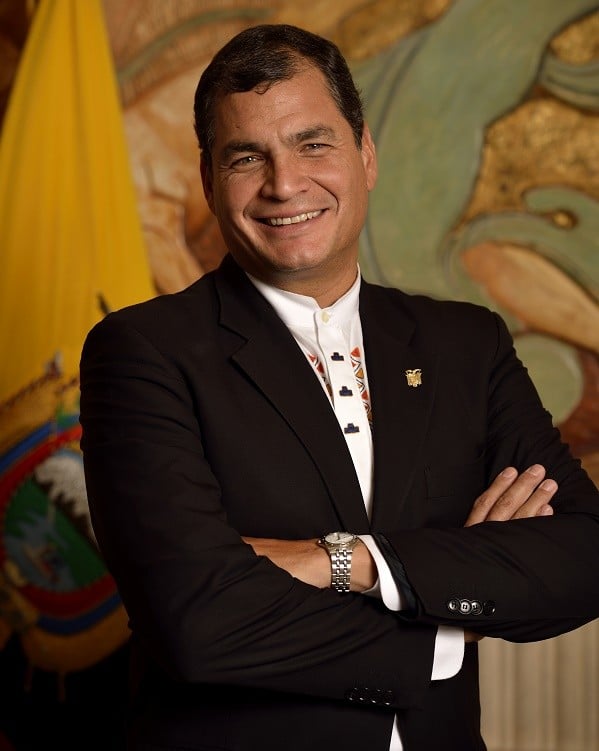
Unraveling Rafael Correa's Net Worth: A Comprehensive Look at the Ecuadorian Statesman's Finances
Rafael Correa, a name synonymous with a transformative decade in Ecuadorian politics, served as the nation's President from 2007 to 2017. His tenure was marked by significant economic and social reforms, positioning him as a prominent figure in Latin American left-wing movements. Beyond his political legacy, one question frequently arises for public figures of his stature: what is Rafael Correa's net worth?
Estimating the precise wealth of any public figure, especially a former head of state, can be complex, often drawing on a mix of disclosed assets, public records, and expert analysis. Our aim is to provide a comprehensive, SEO-optimized exploration of Rafael Correa's financial standing, drawing on available information and offering valuable insights into the factors that contribute to such estimations.
The Varied Figures: Deconstructing Rafael Correa's Estimated Net Worth
When searching for Rafael Correa's net worth, you'll encounter a range of figures, reflecting the inherent challenges in pinning down an exact number for individuals whose finances are not entirely transparent to the public. Some sources, such as Forbes, suggest his net worth could be around $50 million as of 2025, attributing it to his political career and other ventures. Other estimates, however, present significantly lower figures, with some reporting around $10 million, and others even as low as $2 million. This wide disparity necessitates a deeper dive into the potential sources of his wealth and the methodologies behind these estimations.
The reasons for these discrepancies are manifold. Firstly, the exact asset portfolio of political figures is rarely fully disclosed. Secondly, different financial reporting agencies may use varying criteria for valuation, especially concerning non-liquid assets or income streams that are not publicly reported. Finally, the political landscape itself can influence public perception and, consequently, the estimates provided by various outlets.
From Academia to the Presidency: Rafael Correa's Career Path and Financial Growth
Rafael Correa's journey to the presidency was built upon a strong academic and economic foundation, which undoubtedly laid the groundwork for his financial development. Before entering the highest office, Correa was an accomplished economist, having worked for prestigious international organizations like the United Nations and the International Monetary Fund (IMF). These roles typically command competitive salaries and provide exposure to global financial systems, contributing significantly to an individual's early career wealth accumulation.
Furthermore, Correa held academic positions at several universities, including the University of Paris and the Andean University of Ecuador, both before and after his presidency. University professorships, especially at reputable institutions, offer stable income and opportunities for research grants and consulting, all of which contribute to an individual's net worth over time. His expertise as an economist was a core component of his professional identity and undoubtedly a source of legitimate income throughout his career.
His decade-long tenure as President of Ecuador, from 2007 to 2017, marked the most significant period of his public service. While presidential salaries are generally public information, the prestige and influence associated with such a position can open doors to various post-presidency opportunities, indirectly influencing long-term financial prospects.
Sources of Wealth: Beyond the Presidential Salary
While the salary of a head of state is a significant component of their reported income, it rarely tells the full story of a prominent politician's wealth. For Rafael Correa, his financial portfolio likely extends into several areas:
- Government Pension: As a former president of Ecuador, Correa is entitled to a pension from the Ecuadorian government. While the exact amount is not publicly known, such pensions are typically designed to provide a comfortable living for former heads of state, reflecting their service to the nation.
- Academic Work and Political Consulting: Post-presidency, Correa has remained active in academia and political discourse. His teaching engagements at various universities and involvement in political consulting or speaking circuits provide ongoing income streams. These can vary significantly based on demand and engagement but can be substantial for a figure of his prominence.
- Real Estate and Investments: The reference context indicates that Correa's assets include "several properties in Ecuador" and "investments in various industries, such as oil and real estate." Property ownership and diversified investments are common ways for individuals to build and grow their wealth over time. The value of these assets, particularly in appreciating markets, can significantly impact one's overall net worth.
- Other Assets: The mention of a "private jet, which he uses for both personal and political purposes," further hints at a portfolio that includes significant luxury assets. Such assets, while often used for practical purposes, represent considerable capital.
It's important to remember that the precise value of these assets and the exact annual income from his various ventures are not publicly disclosed, contributing to the speculative nature of net worth estimations.
Rafael Correa's Economic Policies and Their Broader Context
During his presidency, Rafael Correa implemented a series of left-wing economic policies. These included increased government spending on social programs, infrastructure development, and a strong emphasis on reducing poverty and unemployment. One of his most notable actions was declaring Ecuador's national debt illegitimate in 2008, leading to a default on over $3 billion worth of bonds and successfully reducing the price of outstanding bonds by over 60%.
While these policies aimed to benefit the Ecuadorian populace, they also generated significant controversy. Correa was praised for bringing Ecuador into the Bolivarian Alliance for the Americas and for his efforts in poverty reduction. However, he also faced accusations of authoritarianism, nepotism, attacking dissidents, and curtailing freedom of speech. These political controversies, while not directly impacting his personal finances, often color public perception and media scrutiny regarding a politician's wealth and its origins. Understanding the context of his political actions helps provide a fuller picture when considering discussions around Rafael Correa's net worth and how public figures accrue wealth over time.
For more on the financial implications of high-profile political careers, you might find insights in rafael correa net worth - Article 1, which delves into general patterns of wealth accumulation for former presidents, or explore rafael correa net worth - Article 2, which compares his financial trajectory with other Latin American leaders.
The Dynamics of Net Worth Estimation for Political Figures
Estimating the net worth of a political figure like Rafael Correa involves inherent challenges. Unlike corporate executives whose compensation and stock holdings are often publicly tied to company performance, a politician's financial standing is more opaque. Key factors contributing to the difficulty include:
- Lack of Mandatory Full Disclosure: While many countries have disclosure laws for elected officials, these often don't require a comprehensive, real-time valuation of all assets and liabilities.
- Valuation of Non-Liquid Assets: Properties, private jets, and investments in specific industries (like oil and real estate) are not always easy to value accurately without direct access to market data and personal financial statements.
- Income from Post-Office Activities: Speaking fees, consulting gigs, and board memberships can be highly variable and are often not publicly reported in detail.
- Political Influence and Opportunities: The prestige and network built during a political career can open doors to lucrative opportunities that might not be directly financial but lead to significant wealth accumulation over time.
Ultimately, any figure regarding Rafael Correa's net worth represents an educated estimate based on the best available information and analytical methodologies. The significant increase in his net worth since taking office in 2007, as suggested by some analyses, aligns with the typical trajectory of individuals who attain high-profile public positions and leverage subsequent opportunities.
Conclusion: A Complex Financial Portrait
In conclusion, while the precise figure for Rafael Correa's net worth remains a subject of varying estimates, ranging from $2 million to $50 million, it is evident that his financial standing has grown considerably through a combination of a distinguished academic and economic career, a decade as president, and subsequent engagements in academia and political consulting. His portfolio likely includes significant real estate holdings, various investments, and potentially other high-value assets. The challenges in achieving an exact figure underscore the complexities inherent in assessing the wealth of prominent political figures, where public service, private ventures, and the absence of full disclosure intersect. What is clear is that Rafael Correa's professional journey has been financially impactful, positioning him as a figure of considerable personal wealth alongside his enduring political legacy.
