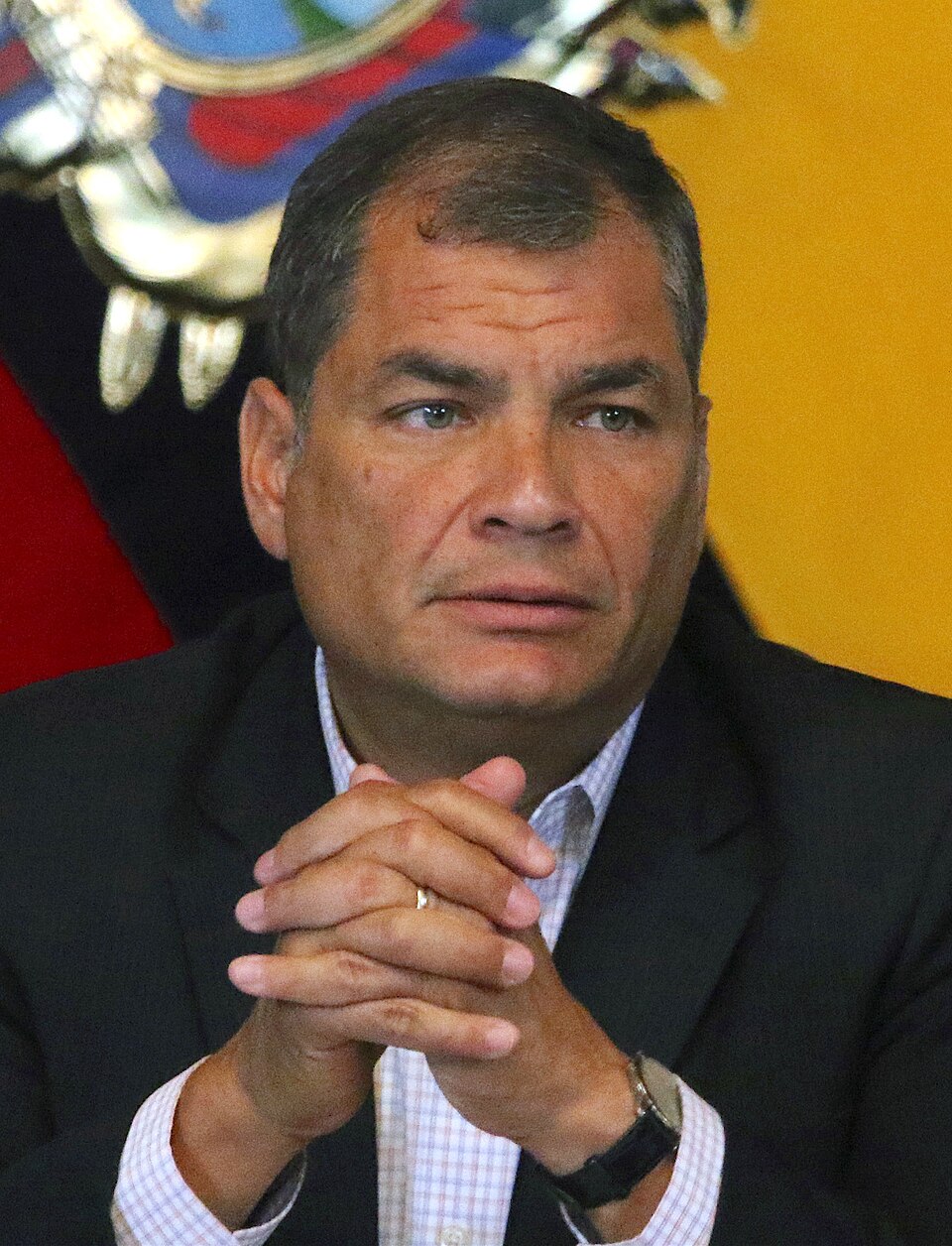
Decoding Rafael Correa's Net Worth: Varied Estimates and Public Scrutiny
The financial standing of prominent political figures often sparks considerable public interest and debate. For Rafael Correa, the former President of Ecuador, inquiries into his personal wealth, or
rafael correa net worth, reveal a complex picture with widely varying estimates. As of 2025, different sources present figures that range significantly, underscoring the challenges in definitively assessing the wealth of non-U.S. public officials, particularly in regions where financial disclosure laws may differ from more transparent systems.
Some reports suggest Rafael Correa's net worth could be as high as an estimated
$50 million, citing sources like Forbes. This figure reflects not only his long and impactful political career but also potential earnings from other ventures. However, other estimations provide starkly different numbers, with some placing his net worth around
$10 million, and others as low as
$2 million. This significant disparity highlights the speculative nature of wealth assessment for individuals whose exact asset portfolios are not publicly disclosed. Factors contributing to these discrepancies can include different methodologies used by wealth-tracking entities, varying access to private financial records, and the inherent difficulty in valuing complex investments and properties without explicit declarations.
Understanding the trajectory of Rafael Correa's career, his political philosophy, and his post-presidency activities is crucial to contextualizing these financial estimations. His time in office, marked by significant policy shifts and economic reforms, inevitably shaped his public and private life, including his financial development.
From Academia to the Presidency: The Genesis of Correa's Financial Standing
Rafael Vicente Correa Delgado, born in Guayaquil, Ecuador, on April 6, 1963, embarked on a career rooted in economics and academia before ascending to the highest office in his country. An economist by training, Correa pursued higher education in Ecuador, Belgium, and the United States, obtaining valuable expertise that would later inform his political agenda. Before his presidency, he honed his skills as an economist for prestigious international organizations, including the United Nations and the International Monetary Fund, roles that typically command substantial salaries and offer exposure to global financial systems. He also held academic positions, teaching at various universities, including his home country's Andean University of Ecuador.
Correa's political career truly took flight when he was elected President of Ecuador in late 2006, taking office in January 2007, a position he held until 2017. His decade-long tenure was characterized by a distinct left-wing, socialist approach, often referred to as "21st-century socialism." His administration significantly increased government spending on social programs, such as healthcare and education, and invested heavily in infrastructure projects. These policies, while aimed at reducing poverty and inequality, also involved large-scale public contracts and economic maneuvering.
One of his most notable economic decisions involved declaring Ecuador's national debt illegitimate in December 2008, arguing it was contracted by corrupt prior regimes. He subsequently led the country to default on over $3 billion worth of bonds, later successfully negotiating a reduction in the price of outstanding bonds by over 60%. This controversial but ultimately successful strategy was lauded by his supporters as a move towards economic sovereignty. Furthermore, Correa's administration brought Ecuador into the Bolivarian Alliance for the Americas (ALBA) in June 2009, aligning the nation with other left-leaning governments in the region. During his time in office, Ecuador experienced a notable reduction in poverty and unemployment, accomplishments often highlighted by his supporters. These significant political and economic transformations during his presidency undoubtedly played a role in shaping discussions around
rafael correa net worth, as powerful political positions can indirectly influence financial opportunities and asset growth.
Beyond the Palace: Post-Presidential Pursuits and Income Streams
Leaving the presidency in 2017 did not mark the end of Rafael Correa's public life or his professional engagements. Since then, he has continued to be an active figure in both academic and political spheres, pursuits that contribute to his ongoing income and public profile. He has resumed his academic career, teaching at several universities, including the renowned University of Paris. Such academic roles, especially for a former head of state with international recognition, can command significant remuneration.
Beyond teaching, Correa remains a vocal and active critic of the Ecuadorian government, frequently speaking out against what he perceives as political repression and corruption within the country. His political commentary and activism keep him in the public eye and may also open avenues for income through speaking engagements, political consulting, or media appearances, although the exact figures for these earnings are not consistently reported. The combination of a substantial government pension (as a former president) and income from academic work and political consulting constitutes his known revenue streams after leaving office. However, the exact annual income from these varied sources is not publicly known, adding another layer of complexity to accurately calculating
rafael correa net worth. For more insights into the financial implications of such careers, you can explore
rafael correa net worth - Article 2.
Assets and Allegations: Unraveling Correa's Financial Portfolio
When discussing the tangible components of Rafael Correa's net worth, various assets have been cited, though a comprehensive, publicly disclosed portfolio remains elusive. It is reported that his assets include several properties situated within Ecuador, a common form of investment and wealth preservation for individuals of significant means. Furthermore, he is said to hold investments in diverse industries, with oil and real estate frequently mentioned. These sectors often represent significant avenues for capital growth and income generation, especially in resource-rich nations like Ecuador.
Perhaps one of the more eye-catching assets attributed to Correa is a private jet. While specific details about its ownership and usage are scarce, private aircraft typically represent a considerable investment, reflecting a high level of personal wealth. This jet is reportedly used for both personal travel and political purposes, facilitating his engagements post-presidency.
It's important to acknowledge that alongside discussions of his wealth and assets, Rafael Correa has also faced various accusations during and after his presidency. These include allegations of authoritarianism, nepotism, attacking dissidents, and curtailing freedom of speech. While these controversies are distinct from his direct financial standing, they often intertwine in public perception, shaping how his wealth is viewed and scrutinized. The opaque nature of his exact asset portfolio, coupled with these allegations, contributes to the challenge of providing a definitive figure for
rafael correa net worth. For further reading on the multifaceted aspects of his financial life, consider checking out
rafael correa net worth - Article 3.
The Enduring Legacy and Financial Footprint of a Controversial Leader
Rafael Correa's journey from an economist and academic to a long-serving, influential, and often controversial president has indelibly shaped Ecuador's political and economic landscape. His significant policies, which included ambitious social spending and a bold restructuring of national debt, undeniably had a profound impact on the lives of millions of Ecuadorians. While celebrated by many for reducing poverty and increasing access to public services, he was also heavily criticized for centralizing power and allegedly suppressing dissent.
Assessing
rafael correa net worth, therefore, is not merely a matter of numbers; it's a reflection of a career built on public service, economic reform, and enduring political engagement. The estimates, ranging from $2 million to $50 million, underscore the inherent difficulties in transparently valuing the wealth of global political figures, particularly those outside the most scrutinized financial jurisdictions. What remains clear is that his varied professional life, from international economist to powerful head of state and now academic and political commentator, has provided him with diverse income streams and opportunities for asset accumulation. Ultimately, while the precise figure of his wealth may remain a subject of ongoing speculation, his financial footprint is undoubtedly a testament to a life lived at the intersection of power, policy, and personal ambition.